By Alyssa McMurtry
MADRID
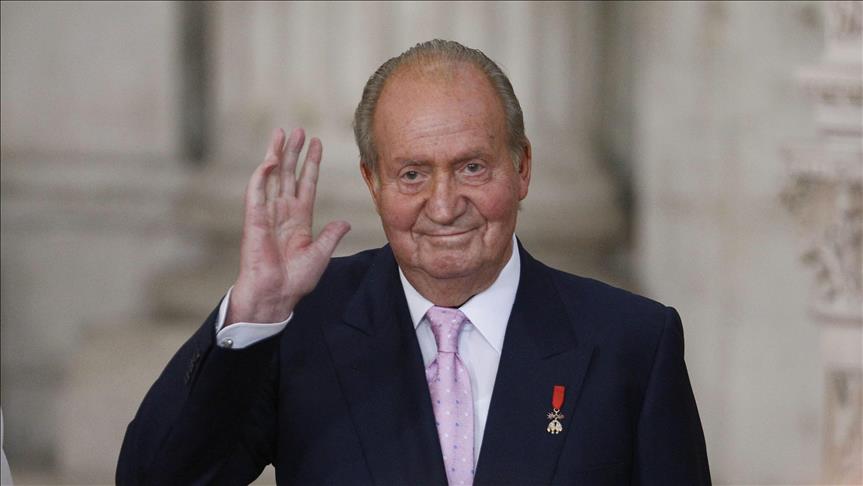
The second week of Spain’s Princess Cristina trial has begun with testimony from one of the accused claiming that the former king of Spain was aware of the activities of a company at the heart of an embezzlement scandal.
Diego Torres, alongside Princess Cristina’s husband, Inaki Urdangarin, ran the Noos Institute, a supposed not-for-profit firm which prosecutors allege was used to siphon off around €6.2 million [$6.7 million] of public funds into private accounts.
In total, 16 people, including the princess, have been summoned before a Mallorcan court accused of illegally collaborating with the Noos Institute.
Torres, who faces up to 22 years in prison for his role, has alleged that King Juan Carlos’ lawyer supervised the activity of the Noos Institute and that the former monarch was privy to revealing emails.
Torres also insisted on his own innocence from a long list of charges including fraud, money laundering, embezzlement and influence peddling.
Judge Juan Pedro Yllanes was set to preside over the Princess Cristina trial until he decided to become a representative for Spain’s Podemos party.
Speaking to Anadolu Agency he said: “The royal family is implicated in this. Now, Torres has said that they knew what was happening, but they’ve always been implicated, directly or indirectly, through their familiar relationships.
“Cristina can’t stop being the king’s sister,” Yllanes added.
The fall from grace
Princess Cristina of Bourbon is the middle child of Spain’s former King Juan Carlos and Queen Sofia. Her older sister is Princess Elena and her younger brother is Felipe, who took over the role of king when his father abdicated in 2014.
In 1997 Cristina married Urdangarin, an Olympic handball player who was once deemed by Spanish media to be the “ideal son-in law”. The couple became media darlings and upon their marriage and were given the official titles of Duke and Duchess of Palma de Mallorca by King Juan Carlos.
Over the next decade the couple had four children while garnering support and adoration from the Spanish public.
It wasn’t until 2011 that the princess’ world began to fall apart. That was when police began to suspect her husband was leading a corruption ring, purportedly responsible for funneling millions of euros in public funds into personal bank accounts.
In 2013 Cristina was formally named a suspect in the case.
“In the end it’s part of human nature. We’re never happy with what we have and we want more,” says Yllanes. “For the princess and her husband it may have seemed like an interesting business that made a lot of money and it’s possible they simply took advantage of the situation."
By 2015, both Cristina and her husband had been stripped of their titles; Cristina was formally charged with tax fraud for her role as a “necessary collaborator” in the scam.
Her husband, accused of being a ringleader of the corruption ring, now faces up to 20 years in prison. Cristina is looking at the possibility of eight years behind bars. She remains sixth in line to the Spanish throne.
This scandal has shaken the faith of much of the Spanish public. King Juan Carlos came in for sharp criticism when, at the height of Spain’s financial crisis, he was seen posing for photos during a luxurious elephant hunting trip he took in Botswana.
The popularity ratings for the royals plummeted from 75 percent in 1995 down to 37 percent in 2013, according to a poll conducted for El Pais.
In 2014, King Juan Carlos decided to abdicate after 44 years. His title was passed to his son Felipe, who has been successful so far in restoring the popularity of the Spanish monarchy.
While Spain does have a vocal minority which does not support the monarchy, only two republican protesters showed up the first day of the Princess Cristina trial.
“While it is an issue that should be debated, Spain has other problems that are far more important than our system of government,” said Yllanes, pointing to social security, high unemployment, inequality and corruption.
Princess Cristina is expected to testify in court next week. A verdict, however, is not expected until this June.
Spain’s corruption problem
Princess Cristina and her husband are far from the only members of Spain’s ruling elite to face heavy corruption charges.
A recently released report by Spain’s interior ministry shows that in 2015, nearly seven people were arrested per day on corruption charges -- 2,442 in one year.
Recently, the ruling Popular Party has been slammed with several corruption scandals involving high-ranking members of the party accused of being involved in corruption networks that pocketed money in exchange for granting public contracts.
Bribery, embezzlement, money laundering, illegal bank accounts, illegal financing and influence peddling are commonly used terms Spain’s current media landscape.
“I think the corruption was a way for these people to prove to themselves that they could do whatever they wanted -- that they had power -- but with an absolute lack of respect for the citizens they represent,” said Yllanes.
According to a recently released Transparency International report, Spain is ranked number 36 globally in the Corruptions Perceptions Index, down two points from last year.
“Perhaps Spain is on a good path now with corruption -- with the courts, new laws and the police all cracking down. It’s possible that there is less corruption today than there was in the past,” Jesus Lizcano, president of Transparency International Spain, tells Anadolu Agency.
In Western Europe, Spain is perceived to be the second most corrupt country, trailing only behind Italy. Spain’s 2015 corruption perception index was the country’s poorest ranking in two decades and has fallen 16 places since it was ranked 20th in 2002.