By Max Constant
BANGKOK
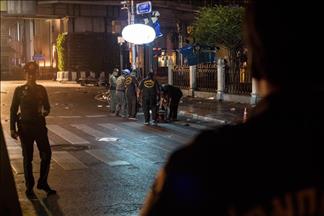
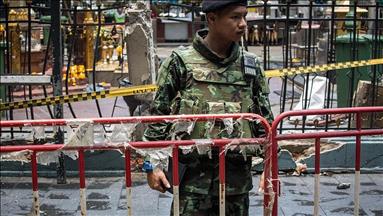
An explosion shook a pier crowded with foreign tourists in central Bangkok on Tuesday, the day after a bomb blast killed 20 people and injured more than 120 others at a Hindu shrine in the city.
As authorities attempted to identify a suspect caught on security cameras before Monday's blast, tourists narrowly escaped injury after an unidentified assailant threw a device onto a platform crowded with pedestrians at 12.59 p.m. (0559GMT).
The Bangkok Post reported Assistant Police Chief Prawut Thawornsiri as saying that an improvised pipe bomb thrown from Sathorn Bridge - which crosses the Chao Phrya river above the landing pier - hit a pillar and bounced into a canal were it detonated harmlessly.
Video shows the device missing the target and landing near the pier. As it explodes, it sends a plume of water shooting into the air and people running down a causeway in fear.
Thawornsiri said he believed the perpetrator intended to throw the bomb onto a busy walking platform leading to the pier, but missed.
No one was reported injured in the attack.
It is not known if the two instances are related, but as is the case with the central Bangkok area in which 20 people died Tuesday, the pier on Bangkok's Chao Phraya River is a major stop for tourists - "especially for Chinese tour groups", underlined the Post
Thai PBS reported Tuesday that National police spokesman Prawuth Thawornsiri had said that the bomb used in the bridge attack was similar to that used last night.
In a 3 p.m. address to the nation Tuesday, junta chairman-cum-Prime Minister Prayuth Chan-ocha said that it appears that there is still "a group of individuals in our country who harbor and carry out their ill wishes against the nation".
"They may aim to score political gain, or to destroy our economy, or tourism or are driven by any other motive," he said. "The government is urgently investigating the incident and finding the perpetrators and their related movement so that they will be prosecuted."
He called on media to only report news "constructively".
"Don’t escalate conflicts with photos, audios, video, or criticism or expressions of opinion, especially in the time that the investigation is still ongoing, as it may influence the case and mislead the public."
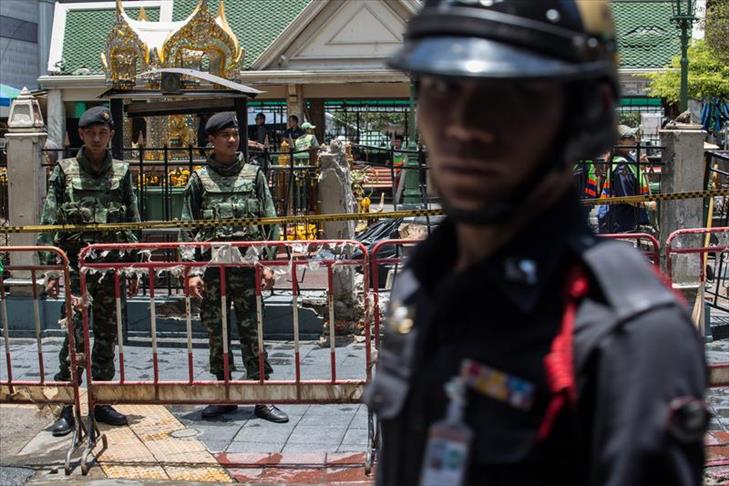
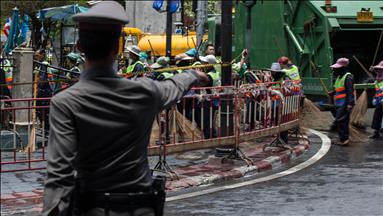
Monday's bomb exploded at the Erawan Shrine, the holiest Hindu site in the country, which is visited every day by thousands of Thais and tourists -- mostly from Asian countries.
Images from security cameras at the shrine show a young man wearing a yellow t-shirt and carrying a backpack entering the sanctuary, acting as if he were taking a picture, hanging his bag at the compound fence, and then leaving without the bag, according to Khaosod.
It reported that the explosion happened soon after the man left.
On Tuesday afternoon, Thawornsiri officially identified the man as a suspect.
"He traveled alone. He arrived at the crime scene, Ratchaprasong intersection and the Brahma Shrine by tuk-tuk," Thawornsiri said, according to Khaosod.
"Then he left the crime scene by a motorcycle taxi."
Among those killed in Monday’s blast were five Thais, two mainland Chinese, two Hongkongers, two Malaysians and one Singaporean. The nationality of eight victims is yet to be determined.
In a statement to local media Tuesday, Chan-ocha vowed to catch the “bad guy” who committed the attack and “to send him to court”.
While heading to a special security meeting Tuesday morning, the deputy prime minister and defense minister, General Prawit Wongsuwan, told reporters he had “a much clearer idea who the bombers are”, adding that he could not “reveal more for now”.
He also insisted that the Thai government “had no intelligence ahead of this attack”.
Thai authorities have not speculated on possible perpetrators.
Army Chief General Udomdej Sitabutr said during an interview on Thai TV channels that he doubted that southern Muslim separatists were involved because of “the type of bomb used” -- a pipe-bomb filled with explosive powder -- and “the mode of operation”.
“This does not match with incidents in southern Thailand,” he said.
Following the explosion, Police Chief General Somyot Pumpanmuang said the remote controlled device -- constructed from five kilos of TNT – had been hidden in the shrine's compound.
He added that two other devices discovered attached to the capital's elevated train system pylons had been handled by bomb experts.
Reports suggest they may not have contained explosives.
The southern separatist insurgency, which has existed since the 1960s but intensified in the last decade, has killed more than 6,500 people since 2004.
The tense political situation in Bangkok could also be a possible motive.
The junta, which seized power from the elected government of Yingluck Shinawatra in May last year, is facing mounting resistance from some parts of the population because of restrictions on civil liberties.
Military leaders are also trying to introduce a constitution that would limit the power of elected politicians.
Elsewhere, members of a military rival to General Chan-ocha’s group are also said to be unhappy about the quasi-monopoly of the junta leaders comrades-in-arms of commandment posts.
Chief Pumpanmuang said Tuesday that he has not ruled out any motives, including the sending of Uighur held in Thai detention centers to China.
In July, Thailand deported 109 Uighur to China -- sparking anger in Turkey, home to a large Uighur diaspora -- while feeding concern among rights groups that they could be mistreated upon their return.
On Monday, China's top news website Sina tweeted #BangkokBlast targeted Chinese tourists, revenge on recent #Uighur case.