ANKARA
Time was passing quickly; this meant that Iman Sayed had to do more campaigning – and make more contacts – before she could submit her candidacy application for Egypt's upcoming parliamentary polls.
Unlike women in other parts of the country, Sayed, in her mid-30s, must convince her constituents in her native city of Edfu – near the southern Aswan province – that a woman can be as politically competent as a man.
"Women have been marginalized for a long time in southern Egypt; they have refrained from political participation for a long time," Sayed told The Anadolu Agency.
"But my electoral success and my ability to respond to the needs of constituents when I am in the legislature will surely change this culture," she said optimistically.
Sayed, whose father is an old hand in Edfu's local electoral politics, has a team of fresh-faced youths who go from home to home to convince people that she would be their ideal representative.
She expects to face tough competition, racing against men – and other women – for a seat in Egypt's first elected parliament since democratically elected President Mohamed Morsi was ousted by the army in mid-2013.
Nevertheless, Sayed hopes she can win the elections, become a lawmaker, and give her constituents what they want most: bread and dignity.
"When the revolution erupted against ex-President Hosni Mubarak, people demanded dignity, and freedom," she recalled, referring to the popular uprising that ended Mubarak's 30-year rule in 2011.
"I hope that I can achieve these demands," Sayed said.
Four years after Mubarak's departure, the prosperity, and stability that the revolutionaries who had descended on Cairo's Tahrir Square in 2011 had dreamed of remain far-fetched.
Around 13 percent of the population is unemployed, including more than half of those under 25.
Egypt is still struggling to put enough dollars into its central bank to secure its food imports for three months, usually doing this via loans from the oil-rich Gulf countries Saudi Arabia, the United Arab Emirates and Kuwait.
Between them, the three wealthy countries have sent billions of dollars to the new Egyptian regime as a sign of support following Morsi's ouster.
The country's dollar reserves now stand at less than $18 billion (most of it belonging to other countries), down from $36 billion when Mubarak stepped down on Feb. 11, 2011.
The economy continues to grow very slowly. The investment minister recently said Egypt would need around $55 billion worth of investments during the 2015/16 fiscal year for the economy to grow by 3.5 percent.
Egypt's government is hoping that an upcoming investment conference – to be held in the resort city of Sharm al-Sheikh in March – will bring some of the needed investment.
Milestone
Sayed's electoral bid is not, however, about the dreams of a woman from a marginalized part of Egypt rising to political prominence. Rather, it is about the enthusiasm that is permeating the country for the parliamentary polls.
Slated for March 22, the elections will be the third and final step on Egypt's transitional roadmap, which was agreed by Egypt's army and political and religious forces after Morsi's ouster in July of 2013.
The transitional roadmap also included a constitutional referendum and presidential elections, both of which were carried out last year.
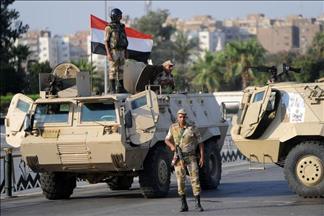
But the parliamentary polls seems to be blowing a new spirit into Egyptian political life, which continues to suffer turmoil induced by unending protests by Morsi's supporters, who insist on calling his ouster a "military coup."
"The elections are important in that they will give credibility to the ruling regime in Egypt and prove that it is keen to honor the transitional roadmap it unveiled after Morsi's ouster," Said Sadek, a political sociology professor, told AA.
"Holding fair and free elections will also reflect positively on Egypt's image at the international level," he added.
Other like-minded enthusiasts say the presence of an elected parliament will contribute to Egypt's political stability, especially when the legislature assumes its natural role in making laws.
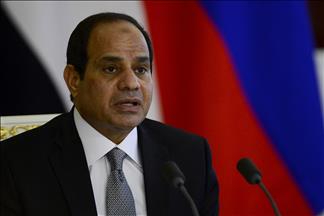
Legislative power in Egypt is now in the hands of President Abdel Fattah al-Sisi, the army chief who ousted Morsi and was later voted to the presidency, given the fact that the country has lacked a parliament since the dissolution of an Islamists-dominated assembly in June of 2012.
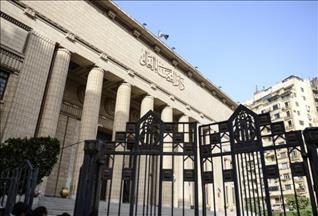
Campaigning for the elections has not officially begun yet, but the official elections commission – an independent body of court judges – has been accepting potential candidates' applications since Feb. 8. The commission will continue to accept applications until Feb. 19.
Nevertheless, the streets of capital Cairo and other provinces have started to see candidates' posters and banners urging the public to elect them for the sake of "stability" or the country's economic well-being.
"Everybody should participate in these elections because they will make our country move forward," Ibrahim Abdel-Gawad, a civil servant in his early 40s, told AA.
The election system 420 out of the 567 parliament seats to independents and 120 seats to political parties.
The constitution gives the president the right to appoint 27 members.
The 1971 constitution, in effect under both Mubarak and late predecessor Anwar Sadat, only gave the president the right to select ten MPs.
The two leaders usually gave the seats to prominent Coptic Christians and female activists, both of which have been traditionally underrepresented.
Political parties are forging alliances and establishing electoral blocs, while efforts are being made to unite candidates before the elections.
But observers believe none of them will win enough seats in parliament to form a government.
"Nor will any party be able to win the of parliament necessary to challenge the president," Mamdouh , a veteran politician and the head of the Constitutional Social Liberal Party, told AA.
"The problem is we don't have real or strong political parties in this country. That's why the election system gives most seats to independents," he said.
, in his late 70s, says the next parliament will be a "transitional one."
But he hopes that political developments in Egypt in coming years will produce political parties with their own political vision able to respond to the needs of the public.
"Without this, there will be no real political life in this country," he said.
Morsi's Muslim Brotherhood, which had the largest opposition bloc in parliament under Mubarak and saw its political heyday soon after the 2011 revolution, is not contesting the elections.
Labeled a "terrorist" movement by the current regime and the target of an ongoing crackdown, thousands of the group's leaders and members have been put in jail on charges of incitement, violence and attacking police.
For her part, Sayed, the female parliamentary aspirant from southern Egypt, has a fighting spirit and does not want to simply be given a seat by the president.
To raise the necessary campaign funds, she enlists help from a team of young volunteers who introduce her to other people in the city, which – even by Egyptian standards – is extremely conservative.
She is occasionally annoyed by the perception that, as a woman, she is not fit for politics. Soon, however, she regains herself confidence.
Sayed hopes to revolutionize the prevailing culture and prove that women, too, can make good politicians.
"I know it will be difficult and costly," she told AA. "But I am sure I can do it."