By Betul Yuruk
GENEVA
The number of migrants who drowned in the Mediterranean Sea in a desperate attempt to reach Europe is up 10 times since the beginning of 2015 compared to last year.
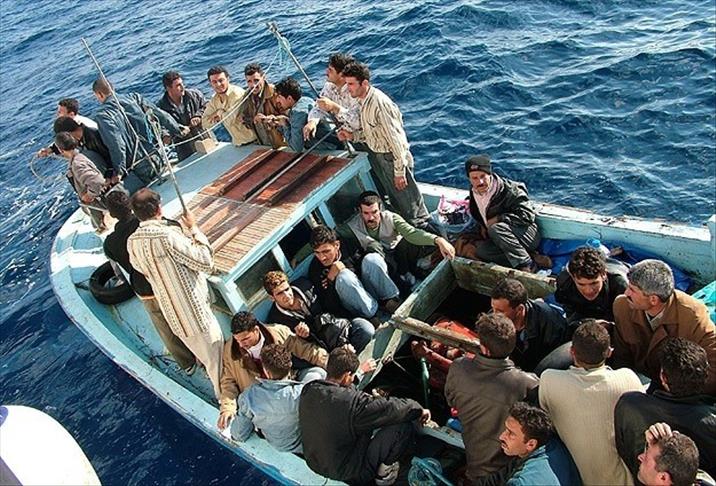
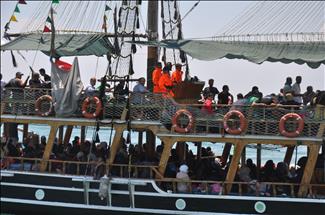
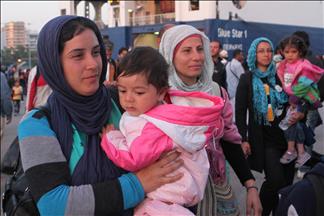
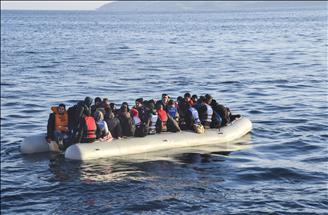
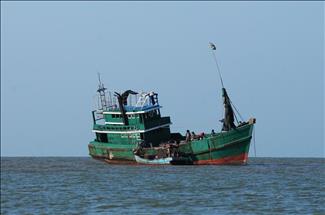
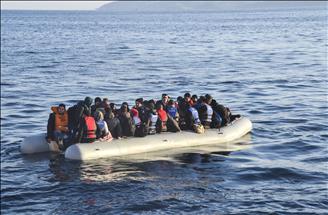
Thousands of migrants fleeing conflict and instability in the Middle East and Africa risk their lives in often small boats to reach the shores of southern Europe.
“Last year, there were about 90 killed,” William Lacy Swing, director general of the International Organization for Migration, told The Anadolu Agency in Geneva. “(2015) is 10 times as many as last year. Were that to continue, you would end up having 30,000 (deaths).”
Swing said the world is living through “unprecedented humanitarian emergencies,” with conflicts in Syria, Iraq, south Sudan, the Central African Republic, Libya, Nigeria and Yemen.
“These are all push factors and they are driving more and more people to try to find security, stability and a better life,” he added.
Weather factors
As the weather gets better, more and more people will attempt to cross the Mediterranean, Swing warned, adding that human traffickers “are not only making a lot of money, but are also harassing and victimizing and forcing migrants onto boats.”
About 10,000 migrants have been rescued from boats traveling across the Mediterranean to reach Italy since last Friday, according to the Italian coast guard.
Italy has repeatedly called on the European Union to share the burden in order to deal with migrant disasters.
EU's Triton operation “failed”
Triton, the EU’s Mediterranean border patrol operation that replaced Italy's search and rescue mission Mare Nostrum last year, has not been successful, Swing argued.
Triton’s budget - 2.9 million euros per month - is just a third of Mare Nostrum’s and it has only six ships and two helicopters, while Mare Nostrum had 32 ships and two submarines.
“I think the only reason why Italy stopped doing it was the cost of it,” Swing said. “They said 'we are paying 10 million euros a month' and the EU has 28 members.”
Not all EU states, however, agree to the idea of giving more financial support to the system. Opponents argue it would encourage more migrants to make the risky journey.
Swing said that IOM was pleading for Mare Nostrum's reestablishment, even though it is not a permanent solution. He defends financial support for Mare Nostrum because of the lack of other alternatives.
“I am not able to identify any viable political processes or active negotiations that offer any immediate hope for a solution to these conflicts and therefore our number one priority is to save lives,” Swing said.