
Kerry to become top US official to visit Hiroshima
Kerry to lead foreign ministers in laying flowers at cenotaph honoring 140,000 killed in 1945 atomic bombing, before Obama’s May visit to Japan
Tokyo
By Todd Crowell
TOKYO
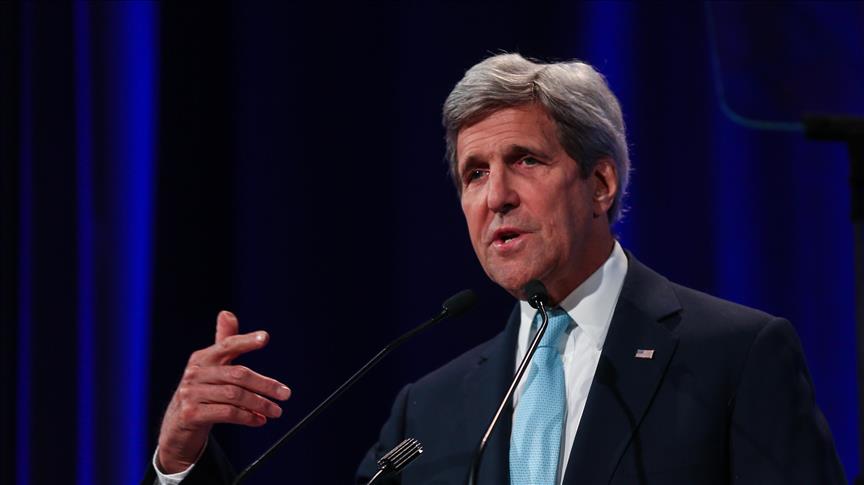
United States Secretary of State John Kerry will become the highest-ranking American to visit Hiroshima Monday when he leads a delegation of foreign ministers in laying flowers at a cenotaph honoring the 140,000 people killed in the 1945 atomic bombing.
Yet to be decided is whether Kerry’s visit will be a test run for President Barack Obama to visit the site in late May, when he will be in Japan to attend this year’s G-7 meeting hosted at the touristic Ise-Shima region.
It will be Obama’s fourth visit to Japan as president and probably his last.
No American president has ever visited Hiroshima while in office. Nor has any president ever issued an apology for the bombing.
The foreign ministers are gathering in Hiroshima this month to lay the groundwork for the G-7 summit.
Japan’s foreign minister, Fumio Kishida, arranged that the meeting be held in his hometown -- he represents Hiroshima in parliament.
Kishida has expressed hope that the meeting would issue a strong joint statement on nuclear disarmament, and that the foreign ministers might get inspiration from the surroundings.
“It is important for world leaders to visit the atom bomb site and see firsthand the realities of atomic bombing,” he said.
Former U.S. ambassador to Japan John Roos was the first senior American official to visit the bombsite when he attended the formal remembrance Aug. 15, 2010.
He did not allow questions during his brief stay.
The current ambassador Caroline Kennedy, daughter of late President John F. Kennedy, followed Roos by visiting the remembrance service in 2014.
Former Speaker of the House of Representatives Nancy Pelosi has also paid her respects in person.
Whether to visit Hiroshima represents a tricky political problem for any U.S. president, as a great many Americans believe that the atomic bombings were justified in order to prevent a bloody land invasion.
If press were to be allowed questions, they will inevitably ask something along the lines of: “If you were President Truman, the man who ordered the bombing, would you have authorized the use of atomic bombs?”
The mayor of Hiroshima, Kazumi Matsui, has said he does not want to embarrass the U.S. president or anyone else by demanding an apology.
It is enough to show the reality of atomic bombing, he says.
The Enola Gay B-29 dropped the first atomic bomb on Hiroshima on Aug. 6, 1945. Three days later another B-29 dropped an atomic bomb on Nagasaki.
Japan surrendered on Aug. 15, 1945.
According to official Japanese figures, the two bombings left more than 200,000 people dead by the end of the year.
Anadolu Agency website contains only a portion of the news stories offered to subscribers in the AA News Broadcasting System (HAS), and in summarized form. Please contact us for subscription options.